Photodynamic therapy pairs a light-sensitive medicine with a specific wavelength of light. When the medicine is activated, it produces a local reaction that can damage nearby cells. The right approach depends on the condition, medicine, light source and treatment site.
Here, Dr. Michael Karlfeldt explains how PDT works, what to ask about, and how our team discusses it as part of individualized care.

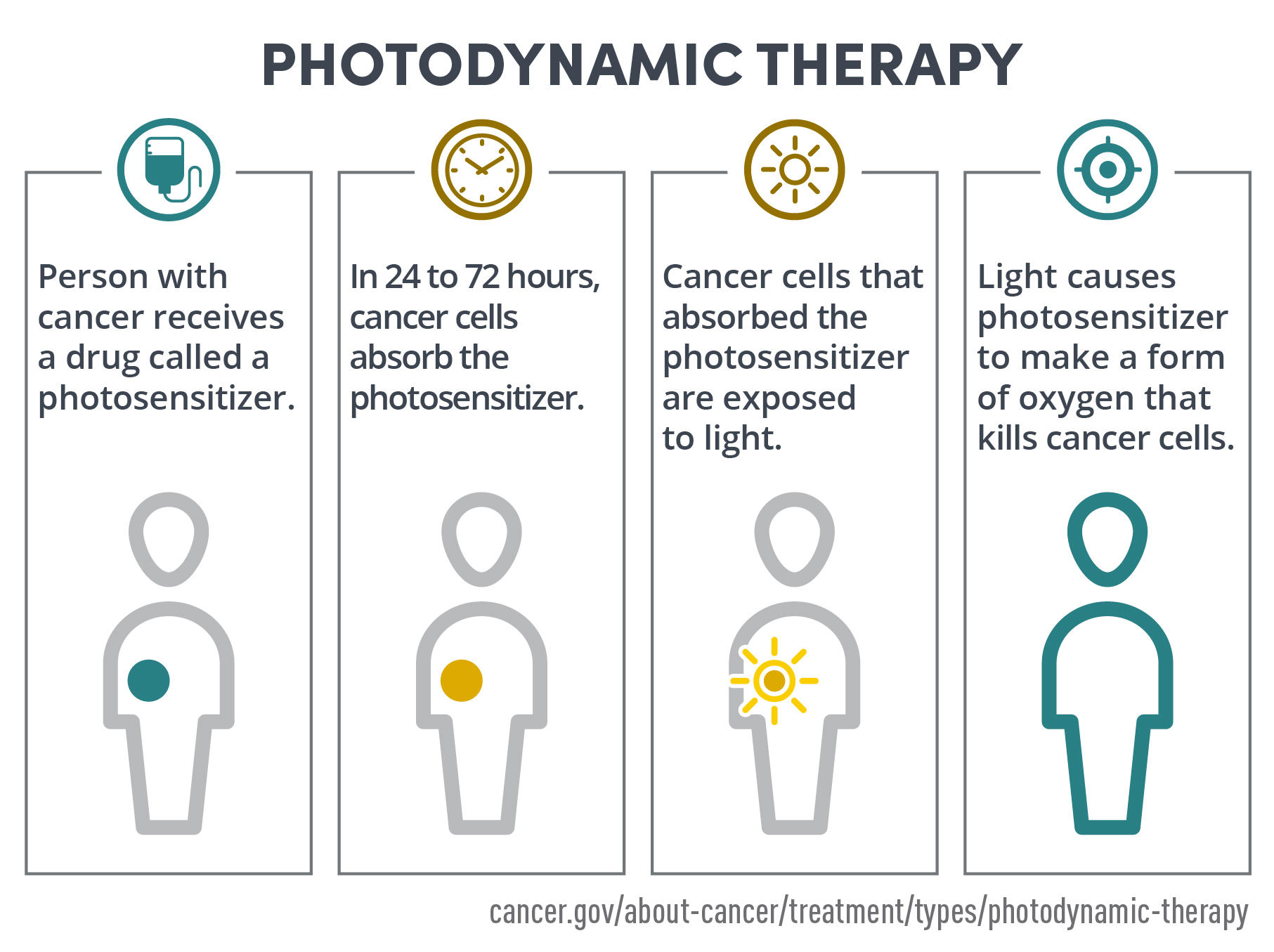
PDT has three parts: a photosensitizing medicine, light at a matching wavelength, and oxygen in the treated tissue. The medicine is activated where the light reaches; PDT is generally a local treatment, and light penetration is limited. Different medicines and delivery methods are used for different approved conditions.

At The Karlfeldt Center, I look at each person’s diagnosis, goals, current oncology care and overall health before discussing whether PDT or another supportive approach may be appropriate. We coordinate with a patient’s oncology team and explain what is known, what is still uncertain, and what a treatment can and cannot be expected to do.
There is no single protocol that fits every person. Photosensitizers, light delivery, potential benefits and risks vary by condition and treatment. We do not promise that PDT will treat or cure cancer.
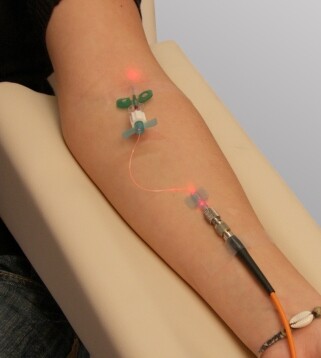
Some PDT procedures use a light source placed close to or within the treatment area. For example, approved medical protocols may use an endoscope or optical fiber to deliver light to selected sites. This is different from simply shining light through the skin, and it is not appropriate for every diagnosis. The specific device, medicine and clinical setting matter.
Ask your clinician: What is the treatment target? Which photosensitizer and light source are used? What evidence applies to my diagnosis? What precautions and follow-up are needed?
The diagnosis and target site guide the choice of photosensitizer, light source and timing.
The medicine is given or applied according to the specific clinical protocol.
A matched wavelength is directed to the intended treatment area.
Your care team discusses response, side effects, skin or eye precautions and next steps.
When light needs to reach a site beneath the surface, specialized procedures may use a fiber-optic applicator placed by a trained clinician. Whether an interstitial approach is suitable depends on the diagnosis, anatomy, device and available evidence. Evidence from one tumor type or procedure should not be assumed to apply to another.
Photobiomodulation and other external light-based approaches are not automatically the same as photodynamic therapy. They use different protocols and have different evidence. We discuss the intended use, what is known and the limits of the evidence before considering any option.
If you are considering PDT, bring your diagnosis, treatment history, current medications and questions. Our team can review whether the approach we offer fits your situation, explain practical details and coordinate with your existing care team.
Schedule a discovery call to discuss your questions with The Karlfeldt Center.
Fax: 208-345-3225
Monday: 9 AM - 4 PMnnTuesday: 9AM - 5PMnnWednesday: 9AM - 6PMnnThursday: 9AM - 5PMnnFriday: 9AM - 4PM